
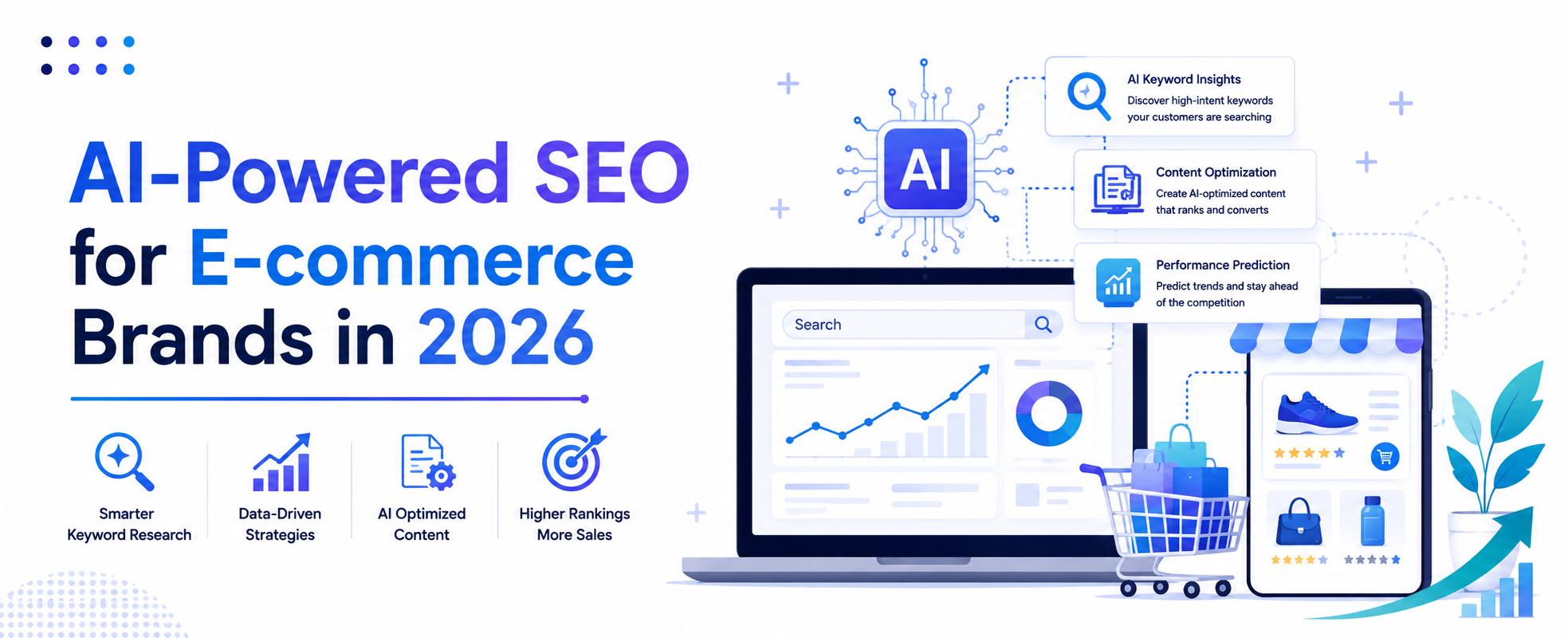
AI-Powered SEO for E-commerce Brands in 2026
E-commerce has never been more competitive. With millions of online stores vying for the same customers, simply having a product catalog online is not enough. In 2026, the brands winning in e-commerce are those leveraging AI-powered SEO – a strategy that combines machine learning, behavioral data, and structured content to drive product discovery, traffic, and conversion at scale.
AI has fundamentally changed how search engines understand and rank e-commerce content. Genexod works with e-commerce brands to implement AI-first SEO strategies that increase organic visibility and turn search traffic into predictable revenue.
Why the Landscape Is Changing
Google’s AI Overviews, product-specific AI summaries, and shopping graph integrations mean that AI now mediates product discovery before users visit any store. Meanwhile, platforms like ChatGPT with shopping integrations and Perplexity’s product comparisons are pulling buyers into AI-guided purchase journeys. If your product pages aren’t AI-optimized, you’re missing these critical conversion points.
Additionally, Google’s algorithm updates in 2024 and 2025 heavily penalized thin product descriptions, duplicate content, and pages lacking semantic depth. E-commerce brands must now create content that satisfies both human shoppers and AI ranking systems simultaneously.
Key Challenges E-commerce Brands Face
- Thousands of product pages with thin, templated descriptions that AI ignores
- Poor structured data implementation (no Product, Review, or Offer schema)
- No strategy for appearing in AI shopping summaries and comparison answers
- High dependence on paid ads with no organic revenue diversification
- Weak category page content that fails to rank for high-intent, buyer-ready queries
Best Practices and Implementation Steps
- Audit and enrich product descriptions with semantic depth – benefits, use cases, comparisons, and buyer questions answered
- Implement Product schema with price, availability, reviews, and brand information
- Build robust category pages that function as authoritative guides, not just filter menus
- Create buying guides and comparison content that AI models cite when users ask “what’s the best X”
- Optimize for voice and conversational search – “Where can I buy eco-friendly yoga mats under $50” is a real query
- Invest in customer review generation and showcase them with Review schema for trust signals
- Use AI tools to identify trending query gaps and create content to capture them quickly
Common Mistakes to Avoid
- Copying manufacturer product descriptions – duplicate content kills rankings and AI citation potential
- Ignoring mobile page speed – Google’s mobile-first index makes speed a ranking factor, not a preference
- Treating SEO as a one-time project rather than an ongoing strategy
- Neglecting internal linking between category, product, and blog content – it’s the connective tissue of e-commerce SEO
Case Study: Fashion Retailer Triples Organic Revenue
A mid-market fashion e-commerce brand came to Genexod with declining organic traffic and over-reliance on Meta and Google Ads. Genexod redesigned their category pages, rewrote 800 product descriptions, implemented full Product schema, and created a buying guide content cluster. Within eight months, organic sessions increased by 142%, product pages began appearing in AI shopping summaries, and organic revenue tripled – reducing paid ad dependency by 35%.
Future Trends
The future of e-commerce SEO will be shaped by AI-powered personalization of search results, multimodal product search (image-to-product), AI shopping agents that compare and purchase autonomously, and real-time inventory and pricing signals integrated into search. Brands that build flexible, data-rich product content now will thrive in this environment.
AI-powered SEO for e-commerce is the difference between a store that generates consistent, compounding organic revenue and one that spends forever on paid traffic. With the right strategy, e-commerce brands can build dominant visibility across traditional search and AI platforms. Genexod delivers that strategy.