
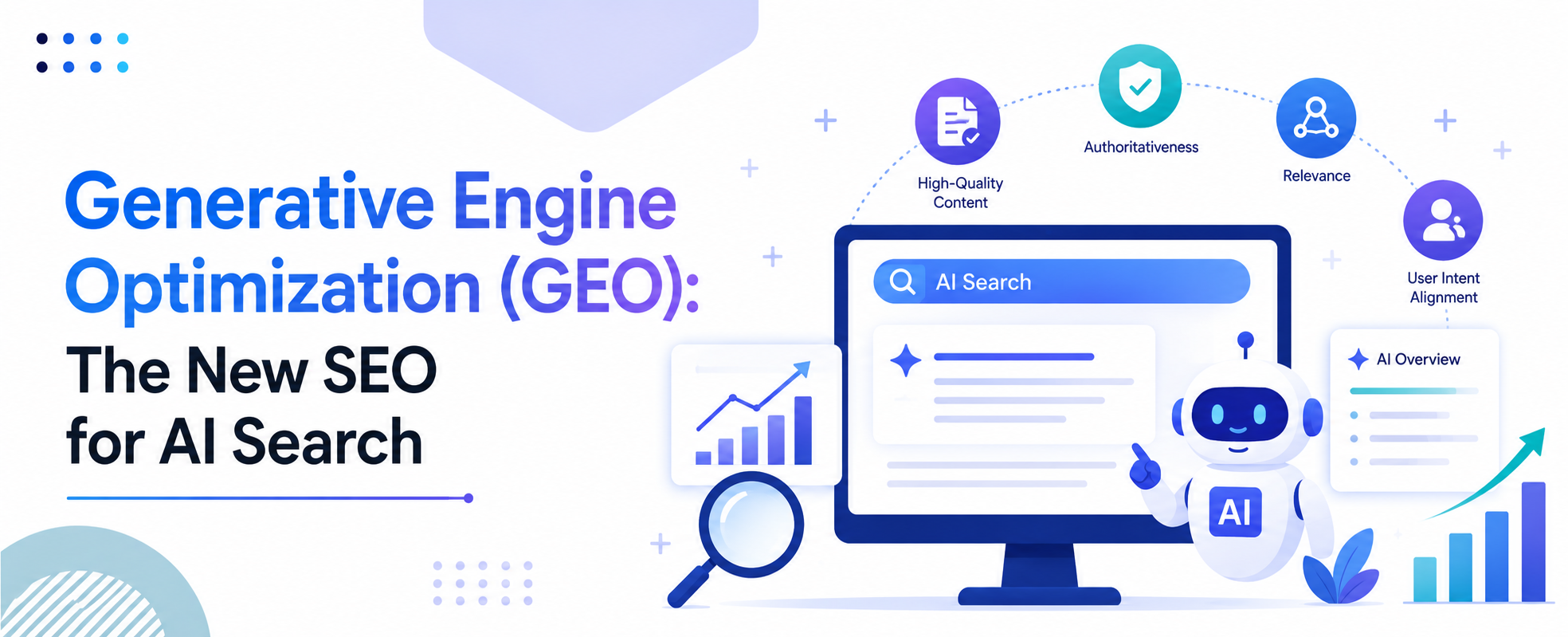
Generative Engine Optimization (GEO): The New SEO for AI Search
Search engines have been the backbone of online discovery for over two decades. But in 2026, a seismic shift is underway. AI-powered tools like ChatGPT, Google Gemini, and Perplexity are fundamentally changing how people find information. Instead of scrolling through ten blue links, users now receive synthesized, conversational answers pulled directly from trusted web sources. This new paradigm is called Generative Engine Optimization – or GEO – and it is the most important evolution in digital marketing since the birth of SEO itself.
For businesses that want to remain visible, relevant, and competitive, understanding and implementing GEO is no longer optional. It is a strategic imperative.
Why the Landscape Is Changing
Traditional SEO was built around keywords, backlinks, and ranking on page one of Google. While those signals still matter, generative AI engines don’t just rank pages – they synthesize content from multiple sources and present a single, confident answer. If your brand is not part of that synthesis, you are effectively invisible.
Studies from 2025 show that over 40% of younger users begin their search journey on AI platforms rather than traditional search engines. Google itself has integrated AI Overviews into its results, meaning the first interaction a user has with a query is often a machine-generated summary, not a list of websites. GEO is the practice of ensuring your content is structured, authoritative, and trustworthy enough to be cited by these AI models.
Key Challenges Businesses Face
- Lack of structured, machine-readable content that AI can parse and cite
- No entity recognition – AI engines don’t know who your brand is
- Thin or generic content that lacks authority signals
- Absence of FAQ-style formats and direct answers that AI models prefer
- Poor E-E-A-T (Experience, Expertise, Authoritativeness, Trustworthiness) signals
Best Practices and Implementation Steps
Implementing GEO requires a systematic approach across content, technical SEO, and brand authority:
- Structure content in clear Q&A and definition formats that AI engines can extract
- Build a comprehensive entity presence – claim your Google Knowledge Panel, maintain consistent NAP (Name, Address, Phone) across directories, and build Wikipedia or Wikidata entries where possible
- Invest in long-form, topic-authoritative content that demonstrates deep expertise
- Use schema markup (FAQ, HowTo, Article) to help machines understand your content structure
- Earn citations from high-authority domains – press mentions, industry publications, and .edu or .gov links
- Optimize for conversational, natural language queries rather than short-tail keyword stuffing
Common Mistakes to Avoid
- Treating GEO like traditional keyword SEO – the rules are fundamentally different
- Publishing content that answers “what” without answering “why” and “how” – AI models prefer comprehensive answers
- Ignoring brand entity building – if AI doesn’t know your brand exists as a trusted entity, it won’t cite you
- Overlooking zero-click opportunities – GEO is about being cited, not just being clicked
Case Study: A B2B SaaS Brand Embraces GEO
A mid-sized SaaS company specializing in HR software partnered with Genexod to restructure their content for GEO. Within six months, their product pages began appearing as cited sources in ChatGPT responses for competitive queries. Their organic brand mentions increased by 38%, and inbound demo requests rose by 27% – with a notable portion of leads citing “I saw it mentioned in an AI answer.” This is the power of GEO done right.
Future Trends
GEO will evolve as AI engines become more sophisticated. Expect increased importance of real-time data feeds, video and audio content indexing by AI, multimodal search optimization, and AI agents that autonomously research and compare vendors before human users even type a query. Brands that build GEO infrastructure now will have a compounding advantage over competitors who wait.
Generative Engine Optimization is not a replacement for SEO – it is its next evolution. Businesses that adapt their content strategy, build brand authority, and structure their digital presence for AI consumption will dominate the next era of search. Genexod helps brands navigate this transition with tailored GEO strategies built for measurable growth.